
Salsa Music Best All-Time “Coristas”: Part 1
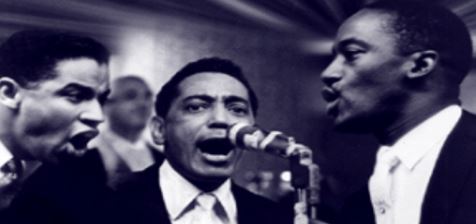
Salsa music is as much based on percussion, rhythm, winds, as it is on the singer and the chorus. And as there were specialist for every instrument, there were those who had a special gift to do “coro”.
A good chorus can make a big difference in the sound of a song or a band. That the reason many orchestras bring guest “coristas” to recordings and special events. Because of this, companies like Fania Records had designated “coristas” for their recordings.
Some “coristas” happened to be good singers; others were not even singers. Here are some of the best “coristas” I remember from the early days of Salsa music.
Johnny Pacheco with Justo Betancourt
Dominican flautist and bandleader Johnny Pacheco had a falsetto voice for “coros” which seem to strike a good cord with Salsa fans. As co-founder of the Fania Records, he had a say on every recording made by the label. Pacheco’s voice paired well with lower tone singers. His most memorable partners were Chivirico Davila, Justo Betancourt, and later Ramon Rodriguez.

Pacheco and Cuban Justo Betancourt did “coros” for Pacheco y su Tumbao and other artists. They became the standard “coristas” used by Fania for the recordings of many of their artists. This includes Willie Colon with Hector Lavoe in albums like “Asalto Navideño”, “El Juicio”, and “Lo Mato”.
A good “coro” needs voices from different spectrums of the vocal scale. They also need to match well and sing in harmony. Chivirico, Justo, and Ramon could all provide nice low tones to contrast Pacheco’s high falsetto. All three were great “coristas”.
Of these three, Ramon Rodriguez was the only who was not a singer. Along with Pacheco, who wasn’t a singer either, they could make excellent “coros”. Evidence of these are the Pacheco albums “El Maestro”, “The Artist”, and “Los Amigos”.
The Unique Paquito Guzman
Paquito Guzman seemed to be able to add pizzazz to any Salsa recording in which he participated in chorus. He had cultivated a modestly successful career as a singer since the early 60’s. In 1962 Paquito joined Tommy Olivencia’s orchestra as one of its singers along Chamaco Ramirez. His voice as singer and “corista” in the four recordings Olivencia did in the 60’s earned him great popularity in Puerto Rico and beyond.

Bobby Valentin had been bandmate of Paquito Guzman in the early 60’s in New York in the conjunto of Joe Quijano. By 1970, Valentin had been a bandleader for a few years and relocated to Puerto Rico in the late 60’s. He decided to start using Paquito as “corista” in his recordings.
Paquito Guzman perhaps gained prominence as a premier “corista” when El Gran Combo invited him to their recordings in the early to mid 70’s. As El Gran Combo started their own record label, Itheir used the freedom of his own label to make some changes in their sound.
In 1971 he added a trombone to El Gran Combo. Additionally, he switched from Eddie Perez doing his “falsetto” chorus, to using Paquito Guzman. His voice added such a uniqueness to the chorus that other bandleaders took note. Paquito worked as a premier “corista” for the recordings of many local bands in Puerto Rico.
Marcelino Guerra and Yayo El Indio
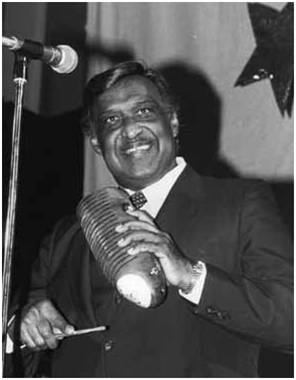
A discussion of the early days of popular “coristas” in salsa couldn’t be complete without mentioning Cuban Marcelino Guerra and the Puerto Rican Yayo El Indio.
Marcelino Guerra had built a career in Cuba mostly as a second voice (segunda voz) with Ignacio Piñeiro’s Septeto Nacional and with Arsenio Rodriguez. After moving to New York in the mid 40’s, he participated in many recordings with Fania and other labels.
Eladio “Yayo El Indio” Peguero would participate in recording both in New York and Puerto Rico, and with different labels. He began his career as a prominent singer in Puerto Rico. However, he moved frequently of bands and between Puerto Rico and New York. Yayo finally found a “home” in the New York-based Sonora Matancera in 1971. He remained with them for 21 years, the longest of almost any member of that band.
El Gran Combo used Yayo El Indio to replace Paquito Guzman in their recordings of the mid to late 70’s. You can hear Yayo in their Salsa albums “Internacional”, “En Las Vegas” and “Aqui No Se Sienta Nadie”. Yayo’s voice can be heard clearly in the songs “Aquí No Ha Pasado Nada” and “No Hay Yaya”.
Many Great “Coristas” Left Out
I realize the above are just the very few “coristas” that come to mind. There are many others that have been left out. “Caito” with the Sonora Matancera, Company Segundo doing “segunda voz” in Cuba, Jose Mangual Jr with Willie Colon, and Sammy Ayala with Cortijo y su Combo.
Eddie “La Bala” Perez with Cortijo and El Gran Combo has to be mentioned. In the forming days of Cortijo y Su Combo, Eddie, who was not yet a regular, was not called for a gig. The promoter told Cortijo that he would continue to hire them if “La Bala” was in the band. As a result, Rafael Cortijo then made Eddie Perez a regular of his Combo.
Let me share a quick anecdote of mine regarding Eddie Perez. As a kid I used to believe that Cortijo and El Gran Combo hired the same “kid” to do “coros”. I used to ask myself, “what is a kid doing in a band of adults?”. Finally, when I saw El Gran Combo on TV, I realized there was no kid. It was Eddie “La Bala” doing his falsettos.
In Part 2 of this series, I’ll touch on more contemporary “coristas” in Salsa music.
Glad to come back.
I have a particular dislike for Johny Pacheco, and many nasal voices, Ismael Miranda for example.
I always wondered why at a younger age I was never into Gran Combo and Poncenha.. Listening to Son de Cuba, a radio show in WRTU-FM it clicked.
While listening the original recording of Fuego en el 23, de Arsenio Rodriguez , I realized Barreto, Harlow, Tipica, Palmieri were copy cats of the Cuban beat, with new arrangements, thanks to the embargo.
The mystery solved. I am hooked on the Cuban sound. It does not matter if it is small or big bands.
Do you remember Jose Cheo Diaz, from WKCR? I used to listen his salsa show on Fridays.
This is a great site…Good luck in your future projects.
Each time I hear someone say it’s the Cuban Sound that made it, well yes and NO !!! – See if it wasn’t for the bands of the late sixty and early seventy Barreto, Harlow, Tipica, Palmieri re-doing the songs of the Cuban Masters in New York – you would not have the Salsa sound of Today. The New York sound was a mix of NY bebop Jazz, with Boogaloo, and Dew wop, and of course Big Band influx which turned that Mambo into a progression we all love to hear. So please give credit to the New York Bands the Pioneers of Salsa because with out them we would still be listening to Mambo, Guaguanco and Pachanga….
What can I say, write, oriental friend? What those musicians whose parents arrived NY in the Coamo did was some sort of sampling.
Yours truly does not speak/talk about Cuban sound, that stretches it too much.The Cuban embargo, made it possible.
Granted shingaling/bugaloo were not totally in this bag, but in the other, the soul brothers enclave people with those mentioned identify with, also sampling their speech, dress and body language.
If you add high hats to a guajira and a little beat, sound in the bass, you could transform it into a bugaloo.
Salsa pioneers?What the hell could that be? The term useless/full or not is arbitrary. Created by those migrants in NY, at some time known as spiks.
To put things in perspective, if you add the best bands, conjuntos, combos, composers, musicians, interpreters, lyricists, not from NY, but Puerto Rico, Cuba had much more variety for its size in terms of geography and population. Simple math.
I tell you more, when I listen to Victoria, Mayari, vs Portabales, Guaracheros de Oriente to name two from each country I believe they are both excellent.
Except with very few exceptions, Fania, watered down the whole, even if exposition to the genre was greater than any other period, allowing those who later accepted they were exploited their 15 minutes of notoriety.
While Cuba kept developing beat and sound structures with some I hate Irakere like, or Van Van those I love, Puerto Rico only produced for a very short while Batacumbele the greatest since and totally forgotten without air play.
I am not an authority on this subject, but I do my homework. At sixty of age, critical at birth, I find any nationalism, false pretenses of superiority from any group, without any research, evidence, trivial. Even if a good keyboard exercise.
Both Chino and you make good points. In my opinion, I would not compare Salsa to Cuban music simply because they are no the same nor intended to be. It’s an evolution of music.
With time music in all genres evolves. Artists live a different set of experiences that influence them. Society goes thru changes, and the social changes and different experiences drive a need for different music, even or hopefully based on our roots.
Salsa was born thru the circumstances of the Latino population living in New York. But a parallel evolution was happening in Puerto Rico, where the Cortijo Combo, with their bomba and plena focus gave way to El Gran Combo, Roena’s Apollo Sound, and many others. Same in Venezuela and other places.
Cuba has evolved its own music, in most cases trying to keep the it’s roots still in the new sound.
Venezuelan writer Cesar Miguel Rondon did a great job explaining this evolution in his book “Salsa”.
[…] Salsa music legend quietly celebrates his birthday. Raphy Leavitt has made some of the best Salsa music there is, and I want to highlight him as he celebrates his 62nd birthday this […]